












SKU/Artículo: AMZ-1739245520
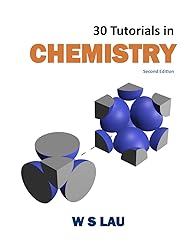
30 Tutorials in Chemistry
Format:
Paperback
Detalles del producto
Disponibilidad:
En stock
En stock
Peso con empaque:
0.79 kg
0.79 kg
Devolución:
Sí
Sí
Condición
Nuevo
Nuevo
Producto de:
Amazon
Amazon
Viaja desde
USA
USA
Sobre este producto
- 30 Tutorials in Chemistry "provides a highly effective bridge between school and university-level chemistry. It gives erudite introductions to key elements of physical, organic, and inorganic chemistry that will be of use to scientists ranging from curious school students, to undergraduates, and to researchers looking to refresh their knowledge. The author links the theory of chemistry to the real world by carefully chosen examples and images. The writing style is concise and jargon free and the book helps to demystify the key principles of topics such as quantum mechanics. The passion of the author for the subject shines through the book, which has the potential to inspire countless young scientists." Professor C Schofield FRS, University of Oxford New to the second edition:The text has been fully revised to improve clarity, rigour, and presentation. Many of the illustrations are new or have been completely remade.New sections on quantum dots (recognised by the 2023 Chemistry Nobel Prize) and the fullerenes.Considerable additional background material has been incorporated to put theory into context. Review of the first edition: “Readers of Chemistry Review show themselves to be keen chemists, excited to learn more about this subject. Therefore, I am certain that you will be interested in this book … Lau guides us to an understanding using clear language and analogies.” Chemistry Review, Vol. 33, No. 3, Feb 2024. Key features include: Written in an accessible language and little prior knowledge has been assumed beyond the reader having studied one year of A level or equivalent. This textbook covers a number of key topics typically found in first (and occasionally in second) year university courses. Explanations start from scratch whenever possible and particular emphasis is given to common misconceptions and unanswered questions in A level. For example, would you be surprised that the mixing of butane and water is actually exothermic and involves the formation of more hydrogen bonds? Every effort has been made to demystify quantum mechanics and entropy. The origin of the Schrödinger equation and the statistical interpretation of entropy are discussed. A mechanism is given for every organic chemistry reaction featured and an extended tutorial on aromaticity includes explanations for orientation effects and Hückel's rule. Selected Key Topics: Physical Chemistry: introduction to quantum mechanics, Schrödinger equation, Copenhagen interpretation, particle in a box, operators, molecular orbital theory, valence bond theory, internal energy change, enthalpy change, entropy, Gibbs free energy, integrated rate laws & the steady state approximation Organic Chemistry: antibond, conformational energy, cyclic rings, alkenes, nucleophilic substitution, elimination (E1, E2, E1cB), alcohols, stereochemistry, enols, enolates & aromaticity Inorganic Chemistry: VSEPR, packing of spheres (hcp, fcc, bcc), crystal structures, derivation of radius ratio rules, lattice enthalpy, derivations of the Born-Landé, Born-Mayer & Kapustinskii equations, transition metals, crystal field theory, molecular orbital theory of complexes, band theory, quantum dots, magnetism, crown ethers, alkalides, electrides, Group I & p-block elements, and the fullerenes Author background: WSL was a scholar at Hertford College and graduated from Oxford University with first class honours. His MChem research in real time NMR was published in the journals Science and PNAS. WSL has taught in several leading independent schools and has been Head of Chemistry for 18 years. He has a special interest in the promotion of scholarship.
AR$136.620
44% OFF
AR$75.902
IMPORT EASILY
By purchasing this product you can deduct VAT with your RUT number
AR$136.620
44% OFF
AR$75.902
 Llega en 8 a 12 días hábiles
con envío
 Tienes garantía de entrega
Este producto viaja
de USA ![]() a tus manos en
a tus manos en
![]()
 a tus manos en

Compra protegida
Disfruta de una experiencia de compra segura y confiable
Tarjetas de Crédito y Débito

Visa

Mastercard

American Express
Pagos a través de PayPal
Compra procesada en dólares con dinero en cuenta o tarjetas internacionales.

Paypal
Pagos a través de MODO
Compra procesada en pesos desde la App de tu banco.

PayPal