









SKU/Artículo: AMZ-B0FKMBVJ2D
XYGStudy
Luckfox Lyra Pi Linux Micro Development Board Based On Luckfox Core3506 Core Board, Integrates Triple-core ARM Cortex-A7 and ARM Cortex-M0 Processors, with Wireless @XYGStudy (Lyra Pi B W)
Model:
Luckfox Lyra Pi B W
Detalles del producto
Disponibilidad:
En stock
En stock
Peso con empaque:
0.18 kg
0.18 kg
Devolución:
No
No
Condición
Nuevo
Nuevo
Producto de:
Amazon
Amazon
Viaja desde
USA
USA
Sobre este producto
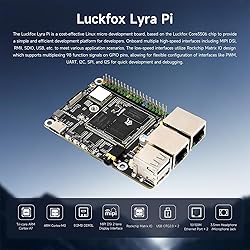
- Overview Luckfox Lyra Pi Linux Micro Development Board, Based On Luckfox Core3506 Core Board, Integrates Triple-core ARM Cortex-A7 and ARM Cortex-M0 Processors Package Contains : Luckfox Lyra Pi B W × 1 IPX 2.4G 2DB Antenna × 1 4G Module Mounting Screw × 1 For more resources you may need, pls contact me via Amazon message, i will send you then via attachment.
AR$93.531
31% OFF
AR$64.502
IMPORT EASILY
By purchasing this product you can deduct VAT with your RUT number
AR$93.531
31% OFF
AR$64.502
 Llega en 18 a 28 días hábiles
con envío
 Tienes garantía de entrega
Este producto viaja
de USA ![]() a tus manos en
a tus manos en
![]()
 a tus manos en

Conoce más detalles
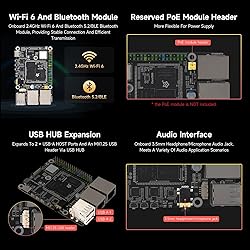
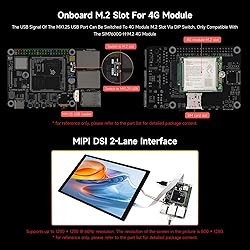
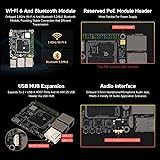
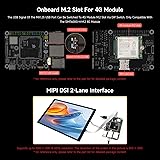
Part Number: Luckfox Lyra Pi B W Luckfox Lyra Pi Linux Micro Development Board, Based On Luckfox Core3506 Core Board, Integrates Triple-core ARM Cortex-A7 and ARM Cortex-M0 Processors Onboard M.2 Slot for 4G Module: The MX1.25 USB port can be switched to the onboard M.2 slot for 4G connectivity via a DIP switch, specifically designed for compatibility with the SIM7600G-H-M.2 4G module. MIPI DSI 2-Lane Interface: A compact MIPI DSI 2-lane interface provides high-performance display driving capability, easily supporting large screens with minimal space requirements. Rockchip Matrix IO Design: Featuring 98 multiplexed functions, the Rockchip Matrix IO design allows flexible configuration of interfaces such as PWM, UART, I2C, SPI, and I2S, enabling efficient development and debugging through GPIO pin multiplexing.
Compra protegida
Disfruta de una experiencia de compra segura y confiable
Tarjetas de Crédito y Débito

Visa

Mastercard

American Express
Pagos a través de PayPal
Compra procesada en dólares con dinero en cuenta o tarjetas internacionales.

Paypal
Pagos a través de MODO
Compra procesada en pesos desde la App de tu banco.

PayPal